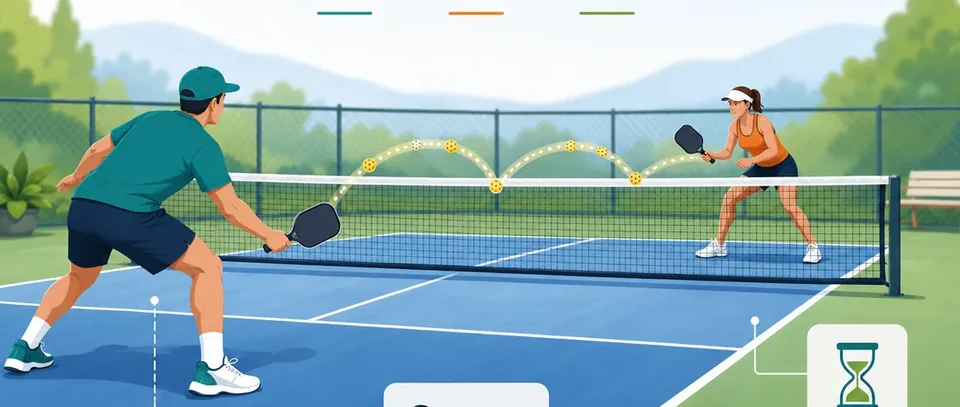
A lob is successful when it changes the opponent’s position without giving away an easy overhead.
Separate a tactical lob from an escape
An offensive lob begins from a contact you can control. You notice opponents leaning forward, crowding the kitchen or committing their paddle low, and choose the space behind them. A defensive lob may simply buy survival time from a bad position. Both can be useful, but they ask for different expectations. Do not judge an emergency save by the same standard as a planned attack.
The cue is not simply that the opponent is short. Reach, anticipation, footwork and the partner’s position all matter. A taller player leaning heavily forward can still be a candidate; a shorter player already waiting back may not be. Read the pair rather than turning the shot into a height-based rule.
Find margin without creating a sitter
Your trajectory needs enough clearance to pass the available reach and enough length to make retreat necessary. A cross-court path can offer a longer landing lane, but it also brings the second defender into the picture. Wind and your own contact quality can change the risk. Start with a large landing area rather than aiming exactly on the baseline.
Avoid the idea that a lob only needs to clear the head by the smallest possible amount. That may work in a perfect contact window, but small errors produce a comfortable overhead. In practice, vary height and depth deliberately until you learn the clearance you can repeat. A high ball alone is not a good lob.
The shot is not finished at launch
Prepare for the reply. If the lob is short, expect an overhead and recover to a defendable position instead of watching. If it sends the opponent back, do not automatically sprint into a vulnerable formation; hold the advantage with your partner and read whether the return will be a drop, drive or another lob.
For practice safety, retrieve lobs with a turn and controlled movement rather than hurried backward running. Use enough court space, tell your partner that lobs are part of the drill, and do not surprise someone who cannot safely pursue them. Tactical variety is not worth creating a preventable collision.
Use it sparingly enough to remain a decision
A successful lob can tempt you to repeat it immediately. The opponent may now be waiting for it. Return to the same preparation and make a new decision. Alternating a dink and a lob from similar setup becomes useful only after both are reliable; disguise cannot compensate for poor depth.
Try it, then record it.
From a cooperative kitchen rally, use a lob only after your partner deliberately leans forward. Record clearance, landing depth and readiness for the next ball separately.
Open your worksheetPicklary practical framework. Practice targets are suggestions, not research findings or a certified rating.