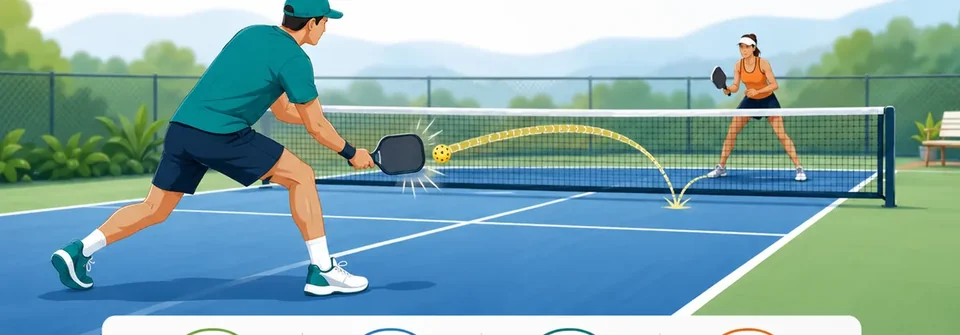
A drive earns a better fifth shot only when you stay balanced enough to play it.
Depth alone is not the decision
A deep return often makes the third-shot drop more demanding, but depth is only one input. A deep ball that sits up in your strike zone is different from a skidding ball that pushes your weight backward. Ask three questions before choosing: can I stop, can I contact in front, and can I keep the next ball below my opponent’s comfortable attack zone?
Drive when you have a repeatable contact and a sensible target. Drop when you can control the arc and want to reduce pace. When you are stretched and late, simplify: more net margin, a larger target and a recovery you can complete. The goal is not to win the argument that a drive or drop is universally better.
Plan the fourth and fifth ball together
The drive–drop sequence is a two-shot plan, not permission to hit the third ball as hard as possible. Direct the drive through a useful lane, then read the block. A short, softer block may create a fifth-shot drop from closer to the net. A deep, firm block may require another grounded stroke. A floating block can be attacked. None of these responses should be automatic.
A frequent failure is moving forward during your opponent’s contact simply because the drive looked strong. If that fourth ball is redirected to your feet, forward momentum makes the fifth much harder. Advance while the ball is travelling away, then become ready as the opponent strikes. You can gain ground over several shots rather than in a single sprint.
Three practice cases
Case A: a high return lands deep and you arrive early. Try a controlled drive at the middle seam, then stop and read the block. Case B: a low return pulls you wide. Use a forgiving drop or a controlled ball into a large safe area; the first task is to regain balance. Case C: the return is short. Move to the ball rather than reaching, then choose between an attacking drive and a softer approach based on the receiver’s position.
These are decision exercises, not forecasts of how every opponent will respond. An opponent with quick hands may absorb your drive comfortably. A player who stays back may give you room to approach behind a deeper ball. Look at the actual response rather than insisting on the sequence you planned before the point.
Measure the approach, not just the winner
Log 20 service points. Mark the third-shot choice, whether the fourth ball was attacked, and whether your team reached a balanced kitchen position. A drive that wins two points but produces many easy counters may be worse for this matchup than a quieter pattern. Change the target or pace before assuming you need a new paddle.
Try it, then record it.
Have a partner feed ten high/deep returns and ten low/wide returns. Say your choice before contact; after the fourth ball, explain whether the original plan still fits.
Open your worksheetPicklary practical framework. Practice targets are suggestions, not research findings or a certified rating.