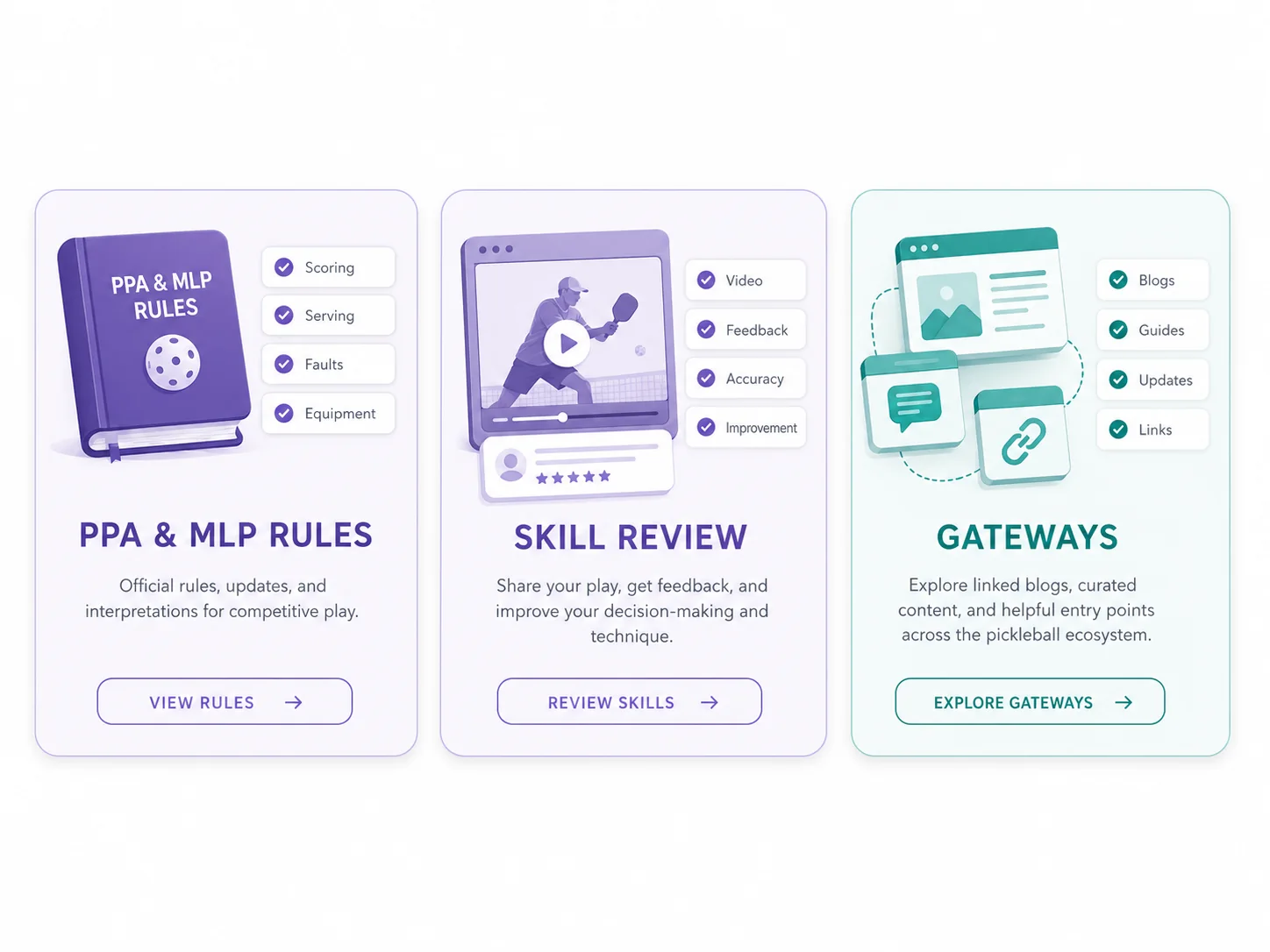
Skill Review · Q&A · FAQ
Learning-focused content split out of Play Hub is now grouped here.
Guides by topic
An Insights hub that trims overlap and groups rules, blog gateways, and learning-oriented community tools in one place.
Open PPA/MLP rules, rulebooks, and notable season changes from this single card.
OpenLearning-focused content split out of Play Hub is now grouped here.
Direct gateways to the external Picklary blogs.
Play Hub now focuses on real-world connections, while Insights gathers rules, content, and learning boards to improve findability.
This is more than a list of articles. It is the starting map for players who want to learn pickleball in a practical order: rules first, then skills, gear, ratings, players, and the competitive scene.
If you are new, begin with the level pathway and the DUPR self-check. If you already play, open the skill category that matches your biggest mistake. If you are shopping for gear, compare materials and shapes before using the paddle finder. Player and pro-tour pages are meant for studying patterns from higher-level games.
Picklary does not copy official rule books or live rankings as a substitute for the source. We link to the source where facts can change and add plain-language explanations, examples, and player-focused takeaways.