The third-shot drop, explained: why it matters and how to drill it
What the third-shot drop is, when to use it versus a drive, and how to practise it.
For players who can rally but need structure to win more points instead of just keeping the ball alive.
All-court paddle: enough control for drops, enough pop for simple putaways.
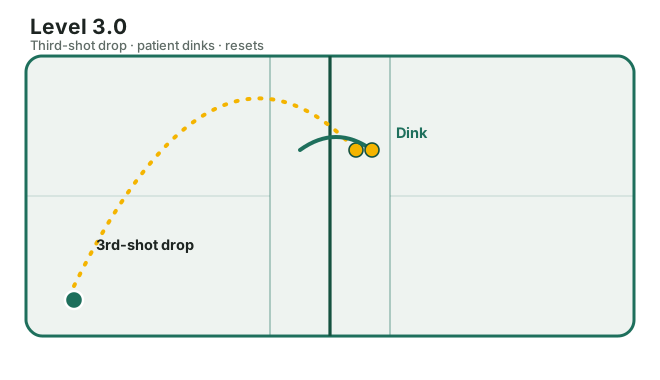
Pick a shot to see how the ball moves in an original court diagram, plus how to hit it and what it does.
How to hit it: Brush low-to-high with a relaxed grip so the ball lands soft inside the kitchen.
What it does: It neutralizes the net team and earns your trip up to the kitchen line.
How to hit it: Lift with a little arc so the ball drops just past the net into the far corner.
What it does: Shaped dinks clear the net more safely and pull opponents out wide.
How to hit it: Soft hands, paddle out front — absorb the pace so the ball dies in the kitchen.
What it does: Resets let you survive “no-man’s-land” and keep advancing to the net.
How to hit it: Step in, contact the high ball out in front, and punch down into open court.
What it does: Finishing easy high balls wins the points you’ve already set up.
What the third-shot drop is, when to use it versus a drive, and how to practise it.
What a good dink looks like, the technique behind it, and how to practise patience at the net.
How partners should move together, and a plain explanation of stacking.
For players who can rally but need structure to win more points instead of just keeping the ball alive. Typical skills at this level: Third-shot drop introduction, Cross-court dinking, Transition resets.
To reach 3.5, work on: Use the third shot as a decision point; Get to the kitchen under control. A good drill is Third-shot drop targets.
3.0 is generally considered an intermediate level on the 2.0–5.0 scale. Note this is a self-assessment guide, not an official DUPR rating.