Tournaments & Leagues · Editor's pick
What is DUPR? How the rating system works and how to use it
A plain explanation of the rating you will keep hearing about.
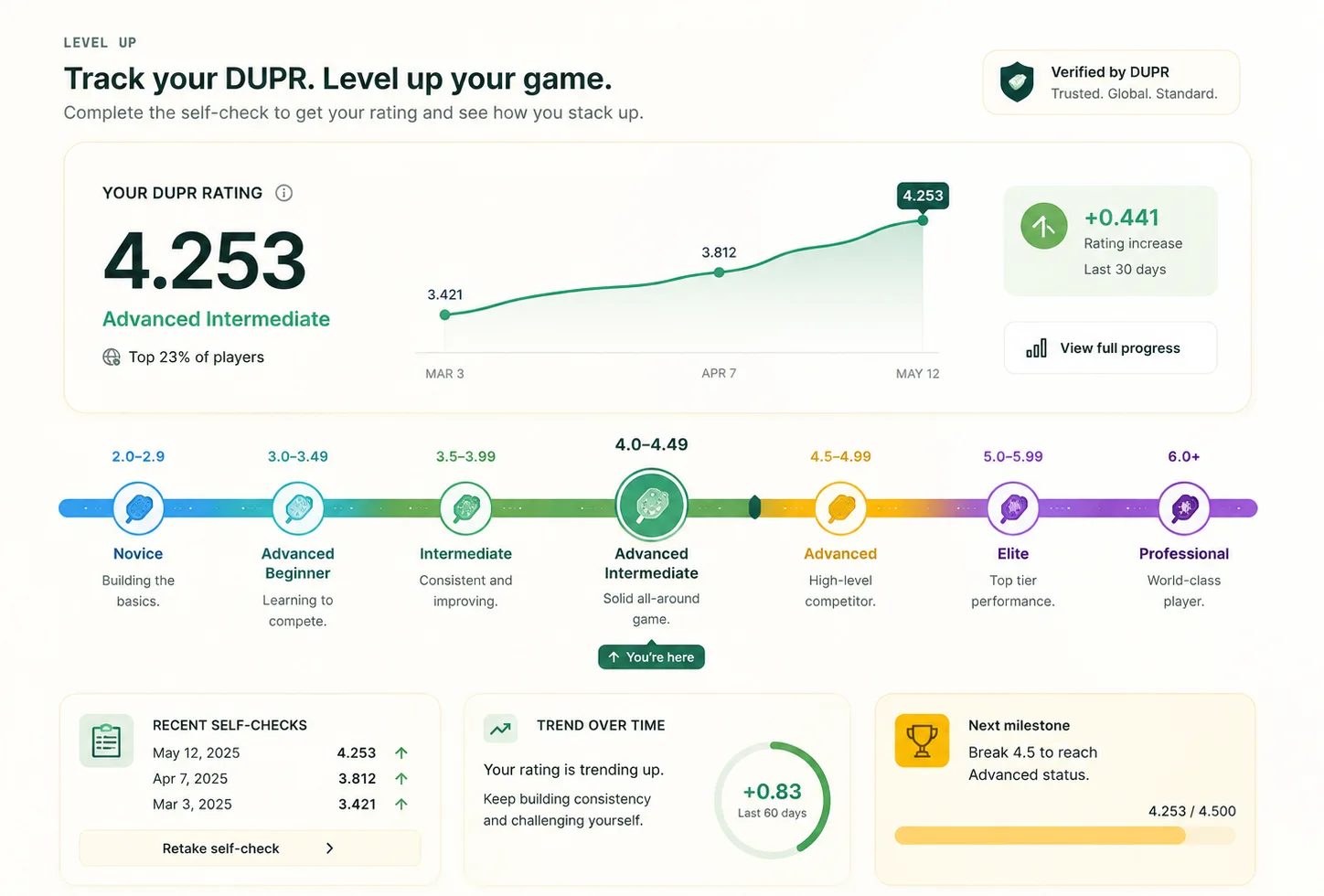
DUPR — the Dynamic Universal Pickleball Rating — is the rating system you will hear about constantly once you start playing competitively. It is a single number that estimates your playing strength from the actual results of your matches. This guide explains what DUPR is, how the number moves, how to get one, and what it can and cannot tell you.
What DUPR actually is
DUPR is an algorithmic rating calculated from the scores of matches you play and log. Instead of asking you to self-assess as a "3.5 player," it looks at who you played, whether you won or lost, and the actual score, and updates a number that reflects how you are really performing. It is widely used to seed tournaments, build balanced leagues, and match players of similar levels for competitive games.
The scale
DUPR is commonly expressed on a scale that runs from roughly 2.0 up to around 8.0. Most recreational players live in the 2.5 to 4.5 range; strong amateurs sit higher, and touring professionals occupy the top of the scale. The important thing is not memorising bands but understanding that the scale is continuous — your rating is a precise decimal, not a wide bracket, so small improvements show up as small movements.
Why "universal" matters
The "universal" in DUPR is the point of the whole system: it puts everyone on one scale regardless of age or gender, and it can rate both singles and doubles. That means a rating earned by an older player in mixed doubles is comparable to one earned by a younger player in men's singles. Because it is built from results across the whole playing population, it travels with you between clubs, cities, and tournaments rather than being a local label.
How your number changes
Every match you log updates your rating. Beating players rated above you pushes your number up; losing to players below you pulls it down; close scores against strong opponents can move you even in a loss. Early on, your rating swings more because the system has little information about you; as you log more matches, the rating becomes more "reliable" and changes more gradually. This is why one bad night does not wreck a well-established rating — the system weighs your whole recent body of results.
Singles and doubles are separate
You carry separate DUPR ratings for singles and doubles, because they are genuinely different games. A player with excellent soft hands and positioning may rate higher in doubles than in singles, where court coverage and power matter more. Do not be surprised if your two numbers differ; that gap is information about your game, not an error.
How to get a DUPR rating
Create a free account, then start getting matches logged. Many clubs, leagues, and tournaments report results to DUPR automatically, and you can also record recreational matches yourself with verification from the other players. The more real, competitive matches you log against a variety of opponents, the more accurate and stable your rating becomes. You can always check the official system and your own rating at dupr.com.
DUPR vs a quick self-check
A real DUPR rating only comes from logged match results — there is no shortcut. If you just want a rough idea of where you might sit while you learn the system, our DUPR self-check gives a decision-making estimate from on-court scenarios. Treat that as a friendly starting guess, not an official rating; the only thing that produces a true DUPR number is playing and logging matches.
What DUPR is not
DUPR is a useful tool, not a verdict on you as a player. It cannot capture why you lost, whether you were experimenting with a new shot, or how much you have improved this week before the results catch up. Use it to find fair games and track long-term progress, and avoid obsessing over small day-to-day movements. The number serves your pickleball; your pickleball does not serve the number.
Common beginner mistakes
- Treating a quick self-rating as if it were an official DUPR number.
- Obsessing over tiny day-to-day movements instead of long-term trend.
- Expecting your singles and doubles ratings to be identical.
- Logging only easy wins, which gives the system a skewed picture.
Quick checklist
- Create a free DUPR account
- Get matches logged through a club, league, tournament, or verified rec play
- Play a variety of opponents to stabilise your rating
- Check singles and doubles separately
- Watch the long-term trend, not single results
Frequently asked
Is DUPR free?
Yes, creating an account and getting a rating is free. You build your rating by logging match results.
How many matches do I need before my rating is meaningful?
There is no fixed number, but the more matches you log against varied opponents, the more reliable and stable your rating becomes. Early ratings swing more.
Why is my doubles rating different from my singles rating?
They are separate because the games reward different skills. Soft hands and positioning matter more in doubles; court coverage and power matter more in singles.
Can I raise my DUPR by only playing weaker opponents?
Not really. Beating much lower-rated players does little for your number, and the system weighs the strength of your opponents and the closeness of scores.