Pickleball rules at a glance: scoring and the serve
A plain-English walkthrough of the serve, the two-bounce rule, and traditional side-out scoring, so your first games run smoothly.
A starter path for players who are still learning the rules, the kitchen, and basic ball control.
Forgiving widebody or hybrid paddle with a large sweet spot, medium weight, and soft feel.
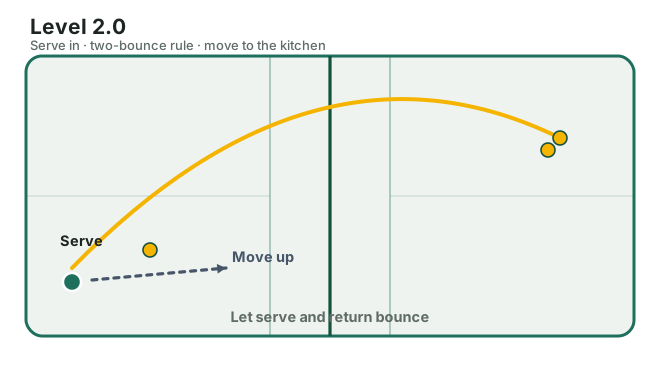
Pick a shot to see how the ball moves in an original court diagram, plus how to hit it and what it does.
How to hit it: Stand behind the baseline, contact the ball below your waist with an upward swing, and aim deep toward the middle.
What it does: A deep serve pushes opponents back and buys you time before their return.
How to hit it: Let the serve bounce, step in, and push it deep with a long, smooth swing.
What it does: A deep return keeps the server back and lets you move up toward the kitchen.
How to hit it: Turn your shoulders, swing low-to-high, and meet the ball out in front of you.
What it does: A reliable forehand keeps rallies going and is the base for drives later.
How to hit it: With a soft grip, gently lift the ball just over the net into the kitchen.
What it does: Dinking slows the point down and builds good kitchen-line habits early.
A plain-English walkthrough of the serve, the two-bounce rule, and traditional side-out scoring, so your first games run smoothly.
Simple ways to make your serve and return consistent and deep.
What the non-volley zone is, what counts as a fault, and why the kitchen shapes nearly every point in pickleball.
A starter path for players who are still learning the rules, the kitchen, and basic ball control. Typical skills at this level: Serve and return basics, Ready position, Two-bounce rule.
To reach 2.5, work on: Understand the court zones and non-volley zone; Serve legally and start points calmly. A good drill is 10 serves to each box.
2.0 is generally considered a beginner level on the 2.0–5.0 scale. Note this is a self-assessment guide, not an official DUPR rating.