The first forehand is part of the serve pattern, not a separate decision.
United States
Hunter Johnson
Direct singles offense, heavy first-ball pressure, and confident finishing
PLAYER STORYLINE
Why this player matters now
Johnson’s 2026 results underline the value of direct singles offense in a field increasingly comfortable with long physical rallies.
Verified snapshot2026-07-22
2026 Indoor NationalsMen’s singles champion
2026 Cape CoralMen’s singles runner-up
Primary identityFirst-ball singles pressure
He looks to finish at the net before the rally resets.
Absorbing opponents force him to build a second layer.
TIMELINE
Career and storyline timeline
- Established a recognizable singles identity across tours.
- Won Indoor Nationals singles over Christopher Haworth.
- Reached the Cape Coral singles final.
PARTNERSHIPS
Roles and chemistry
- Role evolutionFollow how event pairings change the player’s responsibilities.
NEXT WATCH
What to follow next
Second-pattern construction when the serve-plus-one does not finish the point.
Serve plus one mapPredetermine serve location and first-forehand target for ten points, then review success.
PLAYER × PADDLE
How the equipment fits the playing style
Equipment does not create a pro game, but shape, core and balance can support the patterns a player repeats most.
Verified use
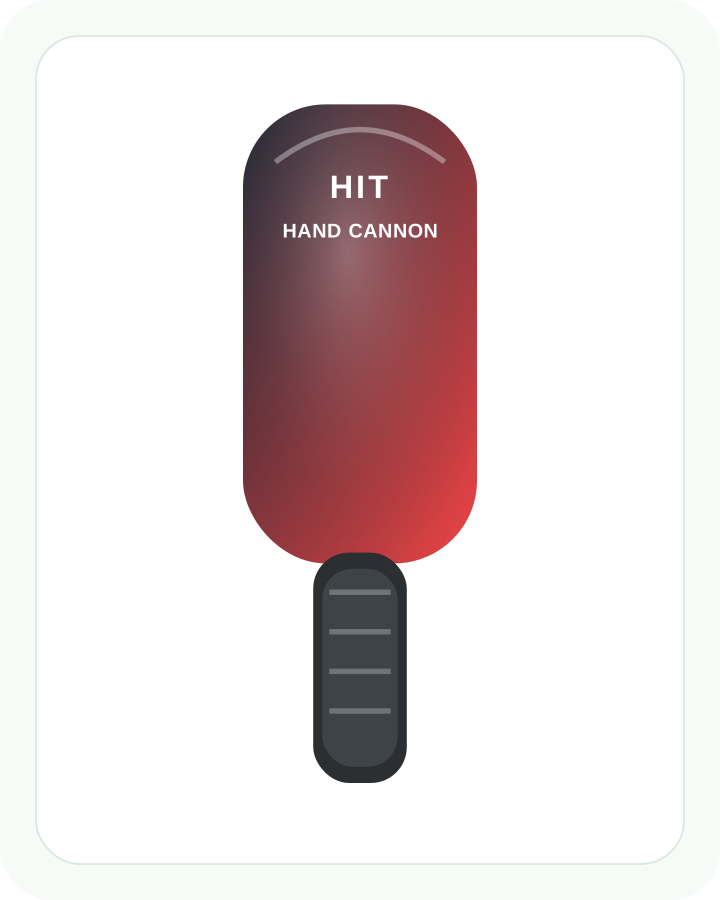
HIT Pickleball Hand Cannon custom platform
Current pro-custom platform; retail specs evolving
first-ball powerspincustom handlesingles control
Why it fits
The custom platform is tuned around a solid handle, direct power, and enough touch to turn serve-plus-one pressure into shorter singles points.
Club-player takeaway
Copy the serve-plus-one structure; a custom paddle cannot fix a weak first-step recovery.
Match-day equipment can change. The verification date and source are shown so readers can distinguish a signature model from reported or evolving use.
Biography
Hunter Johnson’s game is built around making singles points feel urgent. He uses the serve, deep return pressure, and a strong first forehand to reduce the number of neutral exchanges. The development question is how that direct offense holds up against opponents who absorb pace and force him to build a second or third pattern.
Major skills
Serve-plus-one pressureForehand passingSingles court coverageReturn depthClosing at the net
Career notes
- 2026 Indoor National Championships men’s singles champion.
- 2026 Cape Coral Open men’s singles silver medalist.
- Established singles threat across professional tours.
Events
Men’s singlesMen’s doublesMixed doubles
What to study
Study how his serve and first forehand create a shorter point before he approaches the net.
What club players can learn
Three things to study in Hunter Johnson's game: Serve-plus-one pressure, Forehand passing, Singles court coverage. Watching how a top professional applies these in live points is one of the fastest ways to add the same patterns to your own play.
Takeaways for 3.0–4.0 club players
This profile is not only a biography. It is a study note for deciding what to watch in Hunter Johnson's game. Most club players cannot copy pro speed or athleticism, but they can copy the timing, spacing, and risk choices behind the point.
Start with Serve-plus-one pressure. Level improvement often begins with knowing which ball can be attacked and which ball should be kept low. Then watch Forehand passing. Good players usually win the next shot before it arrives because their court position is already prepared.
Finally, study Singles court coverage. In pressure points, elite players often choose repeatable pressure over low-percentage winners. Read the profile with that lens and it becomes a practical training guide rather than just a player page.
- Copy: ready position, court spacing, low resets.
- Avoid copying: pro-level attacks that your current consistency cannot support.
- Practice link: choose one pattern and repeat it with a partner for ten minutes.
Live sources
Prices, sponsors, rankings, DUPR, and product availability change. Verify on the linked official source before publishing buying advice.
DUPR (check official source)
DUPR changes every time results are processed. Instead of pinning a number, Picklary links straight to Hunter Johnson’s profile with their current DUPR and rankings.
| Hometown / base | United States |
|---|---|
| Age | — |
| Height | — |
| Turned pro | Professional tour era |
| Plays | Right-handed |
| Resides | United States |
Image note: Original illustrated profile card. Not a photograph.