Her greatest weapon is repeatable depth late in long rallies.
United States
Kate Fahey
Relentless singles pressure with disciplined depth and competitive edge

PLAYER STORYLINE
Why this player matters now
Fahey is the most persistent singles challenger in the current women’s field and her doubles development can broaden her ceiling.
Verified snapshot2026-07-22
Women’s singles#2 · 15,900 points · DUPR 6.175
Singles medals7 gold · 13 silver · 5 bronze
Women’s doubles#14 · 5,750 points
She accepts long points without abandoning court shape.
The next layer is converting baseline authority into kitchen timing.
TIMELINE
Career and storyline timeline
- High-level collegiate career formed the movement base.
- Rapidly became a repeat singles finalist.
- Reached the singles final against Anna Leigh Waters.
PARTNERSHIPS
Roles and chemistry
- Developing doubles pairingsTesting how singles pressure translates to team geometry
NEXT WATCH
What to follow next
Her transition from deep baseline control to the first two kitchen contacts.
Depth plus transitionHit a deep return, advance, then play two controlled volleys before attacking.
PLAYER × PADDLE
How the equipment fits the playing style
Equipment does not create a pro game, but shape, core and balance can support the patterns a player repeats most.
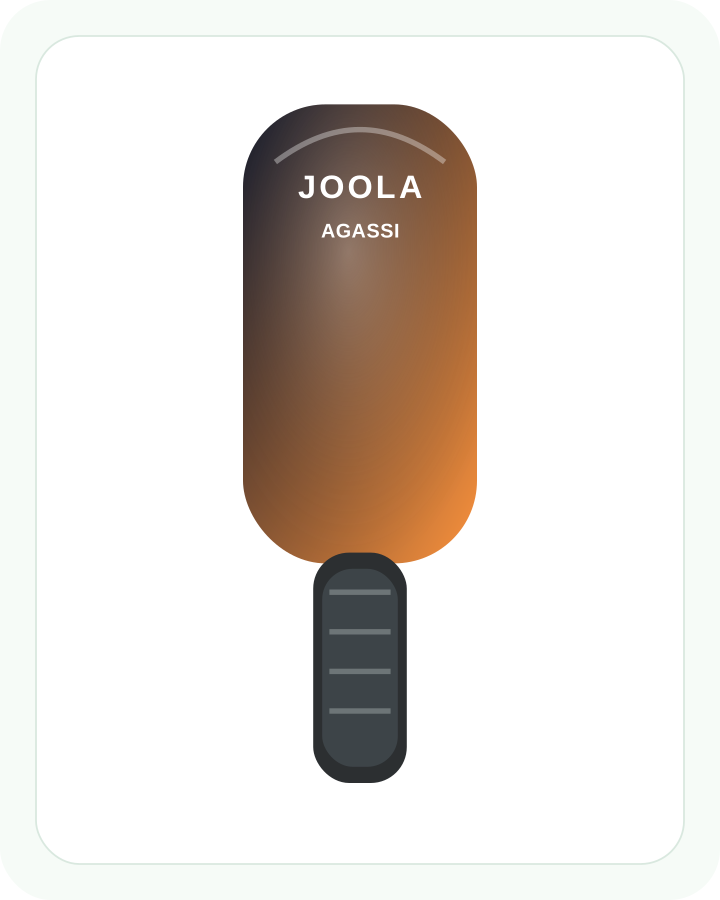
Reported use
JOOLA Agassi Pro V 14mm
Reported current tour paddle; sponsorship has changed
singles drivehigh sweet spotspintransition control
Why it fits
The tennis-inspired shape supports deep, repeatable singles drives while keeping a manageable transition feel as her doubles game develops.
Club-player takeaway
Copy repeatable depth and footwork; the paddle is secondary to her physical point construction.
Match-day equipment can change. The verification date and source are shown so readers can distinguish a signature model from reported or evolving use.
Biography
Kate Fahey’s profile is valuable because it shows how a high-level tennis athlete can adapt without simply playing “small-court tennis.” Her singles success comes from movement discipline, repeatable depth, and the ability to accept long physical exchanges. As her doubles game develops, the storyline is whether those baseline strengths can be translated into softer transition decisions and faster kitchen patterns.
Major skills
Singles movementDeep returnsPassing-shot disciplineTwo-handed backhandScoreboard resilience
Career notes
- PPA women’s singles No. 2 level profile in 2026.
- Seven singles golds and repeated finals appearances on her official profile.
- Transitioned from elite college tennis into top-tier professional pickleball.
Events
Women’s singlesWomen’s doublesMixed doubles
What to study
Watch how she keeps depth through fatigue and uses repeated pressure instead of searching for one spectacular winner.
What club players can learn
Three things to study in Kate Fahey's game: Singles movement, Deep returns, Passing-shot discipline. Watching how a top professional applies these in live points is one of the fastest ways to add the same patterns to your own play.
Takeaways for 3.0–4.0 club players
This profile is not only a biography. It is a study note for deciding what to watch in Kate Fahey's game. Most club players cannot copy pro speed or athleticism, but they can copy the timing, spacing, and risk choices behind the point.
Start with Singles movement. Level improvement often begins with knowing which ball can be attacked and which ball should be kept low. Then watch Deep returns. Good players usually win the next shot before it arrives because their court position is already prepared.
Finally, study Passing-shot discipline. In pressure points, elite players often choose repeatable pressure over low-percentage winners. Read the profile with that lens and it becomes a practical training guide rather than just a player page.
- Copy: ready position, court spacing, low resets.
- Avoid copying: pro-level attacks that your current consistency cannot support.
- Practice link: choose one pattern and repeat it with a partner for ten minutes.
Live sources
Prices, sponsors, rankings, DUPR, and product availability change. Verify on the linked official source before publishing buying advice.
DUPR (check official source)
DUPR changes every time results are processed. Instead of pinning a number, Picklary links straight to Kate Fahey’s profile with their current DUPR and rankings.
| Hometown / base | United States |
|---|---|
| Age | — |
| Height | — |
| Turned pro | Mid-2020s |
| Plays | Right-handed |
| Resides | United States |
Image note: Original illustrated profile card. Not a photograph.