Paddles & Gear · Editor's pick
How to choose your first pickleball paddle
Weight, grip size, core, and face — what each one changes, in plain terms.
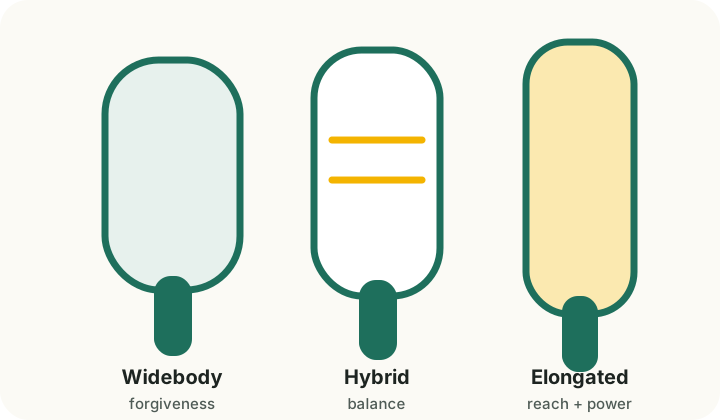
Your first paddle does not need to be expensive, but it should fit how you play. Four things change how a paddle feels more than anything else: weight, grip size, shape, and core thickness — with the face material on top. Understand those, and you can walk into any shop or scroll any website and choose well instead of guessing. Here is what each one actually does.
Weight: the biggest single factor
Weight changes almost everything about how a paddle behaves. Paddles are usually grouped as light (under about 7.3 oz), midweight (roughly 7.3–8.4 oz), and heavy (over about 8.4 oz). A light paddle is quick and easy to maneuver, gives you more control and faster hands at the net, and is gentler on your arm — but you supply more of the power yourself. A heavy paddle delivers more power and plows through the ball with more stability, but it is slower to move and puts more strain on your elbow and shoulder, which can lead to soreness. For most new players a midweight paddle is the sweet spot: enough power to keep the ball deep, enough control to stay in dink rallies, and not so heavy that your arm tires.
Grip size
Grip size affects comfort, control, and how much wrist you can use. A smaller grip lets you snap the wrist for spin and switch hands quickly, while a larger grip is more stable and reduces the urge to over-grip. A quick test: hold the paddle and slide the index finger of your other hand into the gap between your fingertips and palm — it should fit snugly with about a finger's width of room. When in doubt, choose the smaller grip: you can build a small grip up with an overgrip, but you cannot shrink one that is too big. A grip that is too large is a common, quiet cause of elbow pain.
Shape
Paddle shape is a trade-off between sweet spot and reach. A standard or "classic" shape has a balanced layout and a large, forgiving sweet spot, which is why it is the easiest to learn on. An elongated shape adds reach and a little more power for serves and drives, but the sweet spot is narrower and less forgiving, so it suits players who already make consistent contact. A widebody shape maximises the sweet spot and is very beginner-friendly. As a first paddle, a standard or widebody shape will reward you with more clean hits while you are still grooving your contact point.
Core thickness
Almost all modern paddles use a polymer honeycomb core, and its thickness sets the feel. A thicker core (around 16 mm) plays softer and more controlled, absorbs pace for cleaner resets, is more forgiving on off-centre hits, and is usually quieter. A thinner core (around 13 mm) gives more pop and power but is less forgiving and can feel harsh. Beginners almost always benefit from a thicker, control-oriented core: it makes the soft game easier and protects your shots when you mishit.
Face material
The hitting surface — fiberglass, graphite, or carbon fiber — tilts a paddle toward power or control and affects spin. It is enough here to know that fiberglass leans toward power, while graphite and raw carbon lean toward control and spin. Because this deserves its own explanation, see our full guide to paddle face materials before you decide.
Budget: what a beginner actually needs
You do not need a tour-level paddle to learn, and the most expensive option can actually be harder to play with because many are tuned for advanced, aggressive styles. At the same time, avoid the cheapest all-wood paddles bundled in big-box sets — they are heavy and unforgiving. A sensible mid-range paddle in a control-friendly weight and shape will serve you far better than overspending, and you can upgrade later once you know your style. Spend your money on a paddle that fits, not on the highest price tag. While you are kitting out, our starter-kit guide and notes on court shoes cover the rest.
Try before you commit
Whenever you can, hit with a paddle before buying. Many clubs keep loaner paddles, retailers run demo programs, and friends are usually happy to let you try theirs for a few rallies. Pay attention to three things: does it feel light enough to react at the net, comfortable in your hand without squeezing, and stable when you mishit slightly off-centre? If yes to all three, it is a good fit — regardless of brand or price.
Choosing a first paddle comes down to fit, not hype. Pick a midweight, control-friendly paddle with a comfortable grip and a forgiving shape, and you will spend your early months improving your game instead of fighting your equipment.
Common beginner mistakes
- Buying a heavy or pro-level paddle that strains the arm and is hard to control.
- Choosing a grip that is too large, a quiet cause of elbow pain.
- Starting with an elongated shape before your contact is consistent.
- Settling for a cheap all-wood paddle from a big-box bundle.
Quick checklist
- Aim for a midweight paddle (about 7.3–8.4 oz)
- Check grip with the finger-gap test; err smaller
- Pick a standard or widebody shape
- Choose a thicker (~16 mm) control core
- Hit with it (loaner/demo) before buying if you can
Frequently asked
What weight should a beginner choose?
A midweight paddle (about 7.3–8.4 oz) is the best all-round start: enough power to keep the ball deep, enough control for dinks, and not heavy enough to strain your arm.
How do I know my grip size?
Hold the paddle and slide your other index finger into the gap between fingertips and palm — about a finger of room is right. When unsure, choose smaller and add an overgrip.
Thick or thin core?
Beginners usually want a thicker core (around 16 mm): it is softer, more forgiving on mishits, and makes the soft game easier. Thinner cores add pop but are less forgiving.
Do I need an expensive paddle?
No. A sensible mid-range paddle that fits your hand and style will serve you better than a tour-level model, which is often tuned for advanced play.