How to follow the global scene and find official rankings
Go to the primary source, not second-hand reposts.
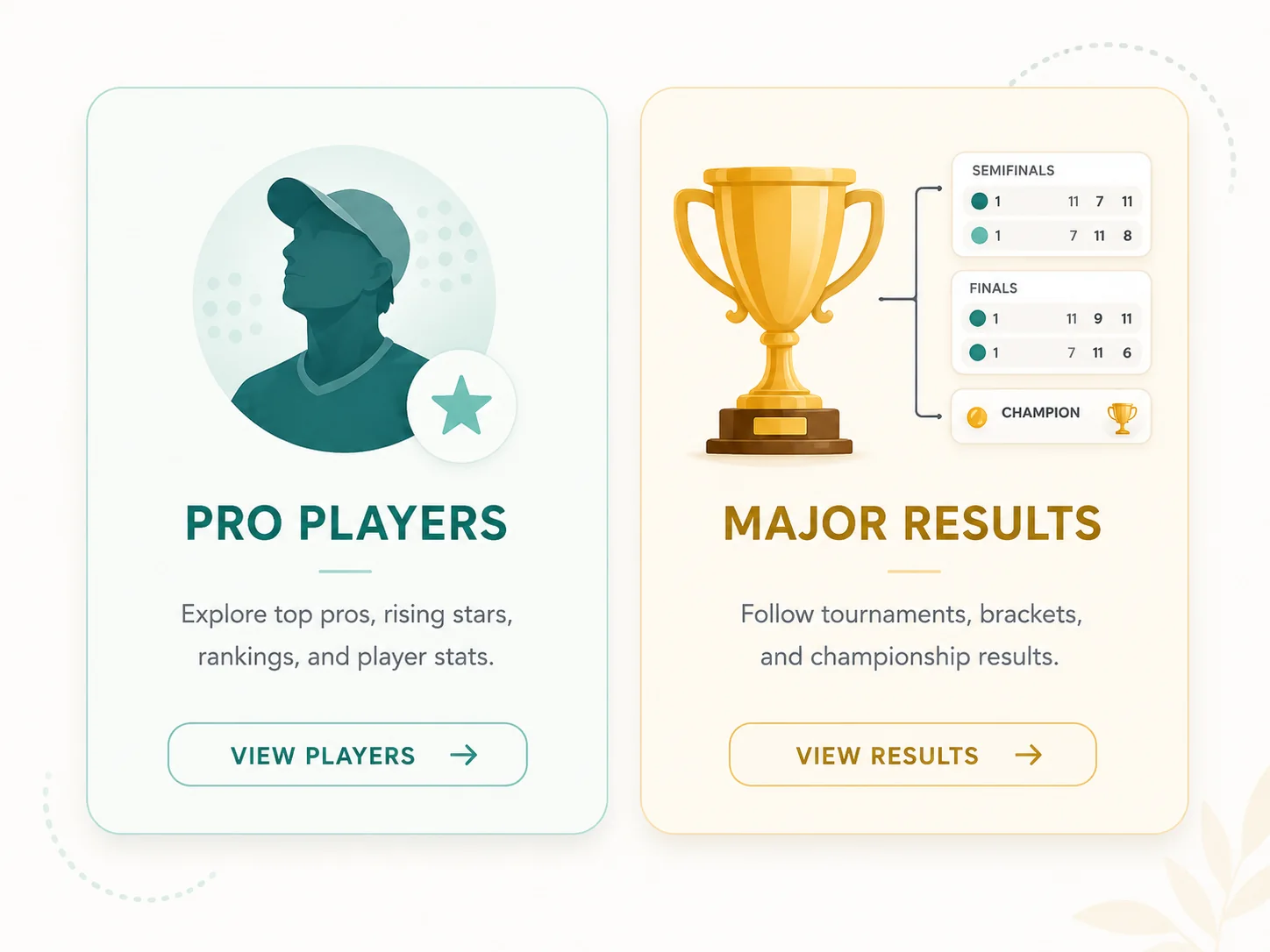
Pickleball's professional scene is growing fast, and that growth comes with a problem: results, rankings, and "news" get reposted across social media until the details are wrong. The reliable way to follow the sport is to go to the primary source — the official tour and event sites — rather than second-hand reposts. Here is how the global scene is organised and how to follow it without being misled.
The main professional tours and leagues
At the top of the sport are a few major organisations. The PPA Tour and the APP Tour run professional tournament circuits with brackets across age and skill divisions, and Major League Pickleball (MLP) runs a team-based league format. You do not need to memorise their histories; what matters is that each one publishes its own schedule, brackets, and results on its official site and app. When you want to know who is playing this weekend or who won a draw, the tour's own site is the source that is actually correct.
Where to watch
The tours stream and broadcast their events through their official channels and broadcast partners, including their own YouTube channels and websites. Because the exact broadcasters and streaming deals change from season to season, the durable habit is to start at the tour's official site and follow the "watch" or "live" links from there rather than relying on a link someone reposted. That way you always reach the current, legitimate stream.
Official rankings versus DUPR
Two different number systems often get confused. A pro tour's rankings are built from points earned at that tour's professional events, and they tell you who is performing best on that circuit. DUPR is a separate rating, calculated from the scores of logged matches across the whole playing population, used to seed events and build fair recreational games. A touring pro will have both, but the two answer different questions — tour ranking is "who is winning pro events," while DUPR is "how strong is this player overall." Always check which one a headline is actually talking about.
How to verify what you read
When you see a surprising result or ranking claim, trace it back to the official source before believing or sharing it. Reposts routinely scramble scores, mix up draws, or attach the wrong photo. The official tour or event page will have the bracket and the final score; if a claim is not on the primary source, treat it as unconfirmed. This same discipline — primary source first — is how we handle results on this site.
Following players
To follow specific players, use the tour's official player pages and the players' own verified accounts rather than fan reposts. Official player pages link to schedules and current standings, and verified accounts are where players announce their own news. This keeps your information first-hand and current, and avoids the rumours that spread quickly in a fast-growing sport.
Amateur versus pro
Most of us play and compete at the amateur level, and the pro scene is mainly something to watch and learn from. Studying how the best players construct points — their patience at the kitchen, their third-shot choices, their targeting — is one of the fastest ways to improve your own game. If you want to compete yourself, the amateur divisions at sanctioned events are open to you; our guide to how a tournament works explains how to enter at your level.
Using Picklary to keep up
To make this easier, our tournaments and update centre sections track the scene and point you to the primary sources for schedules, results, and rule changes, rather than re-reporting unverified claims. Use them as a starting hub, then click through to the official tour and event pages for the final word.
The scene moves fast, but the habit that keeps you accurate is simple and evergreen: go to the official tour or event source first, confirm before you share, and never confuse a tour ranking with a DUPR rating.
Common beginner mistakes
- Trusting reposted scores or rankings that scramble the details.
- Confusing a tour ranking with a DUPR rating.
- Relying on a reposted stream link instead of the tour’s official watch page.
- Following fan accounts instead of official player pages and verified accounts.
Quick checklist
- Bookmark the official PPA, APP, and MLP sites
- Start at the tour site for schedules, brackets, and streams
- Confirm results on the primary source before sharing
- Separate tour rankings from DUPR
- Use Picklary tournaments/updates as a hub to primary sources
Frequently asked
What are the main pro pickleball organisations?
The PPA Tour and APP Tour run professional tournament circuits, and Major League Pickleball runs a team-based league. Each publishes its own schedule and results on its official site.
Where should I watch pro pickleball?
Start at the tour’s official site and follow its watch or live links. Broadcasters and streaming deals change each season, so the official site is the durable way to reach the current stream.
Is a pro ranking the same as DUPR?
No. A tour ranking comes from points at that tour’s pro events; DUPR is a separate rating from logged match scores across all players. They answer different questions.
How do I avoid pickleball misinformation?
Trace any surprising result or ranking to the official tour or event page before believing or sharing it. Reposts often scramble scores and draws.