Skills & Drills · Editor's pick
Pickleball for beginners: your complete start-to-3.0 roadmap
Rules, your level, the first four shots, gear, and where to go next — in order.
New to pickleball? This is your map. Instead of scattering across dozens of tabs, follow this page in order — each step links to a deeper guide when you are ready.
1. Learn the rules that actually matter
You can start playing once you understand three things: scoring and the serve, the two-bounce rule, and the kitchen. Read the rules at a glance first, then the kitchen (non-volley zone) explained. In doubles, add basic positioning so you and your partner move as a unit.
2. Find your level
Knowing your rough level tells you what to practise next. Try the DUPR self-check for a quick estimate, browse the level pathway from 2.0 to 5.0, and read what DUPR is so the numbers make sense.
3. Master four shots first
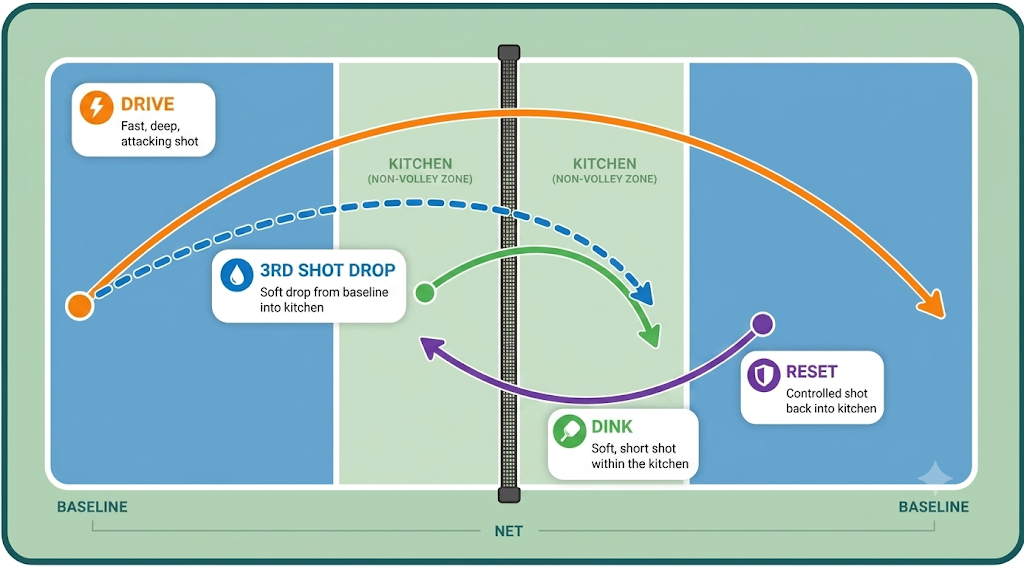
Beginners improve fastest by drilling a small set of shots. Start with the serve and return, then dinking and the third-shot drop — the shots that let your team reach the net. Each level page also has an interactive shot explorer that shows the ball path.
4. Get the right first paddle (don't overspend)
Your paddle matters less than practice at first, but the wrong one slows you down. Read how to choose your first paddle, then use the paddle guide to compare shapes and materials.
5. Build a simple routine
Consistency beats intensity. The first 30 days practice routine gives you a week-by-week plan, and learning to self-rate honestly keeps your goals realistic.
6. Keep learning from the pros
Once you can rally, watching good players accelerates everything. Study pro playing styles and follow the pro tour and results to see the patterns you are building toward.
Bookmark this page and come back as you level up — each section points to the next thing to work on.
Common beginner mistakes
- Trying advanced shots before the dink and third-shot drop are reliable.
- Overspending on a paddle that does not match your level.
- Staying back at the baseline instead of moving up to the kitchen line.
Quick checklist
- I know scoring, the two-bounce rule, and the kitchen.
- I have estimated my level with the DUPR self-check.
- I can serve deep and return deep consistently.
- I am drilling dinks and third-shot drops.
- I have a paddle that fits my level and grip.
Frequently asked
How long until I reach 3.0?
With regular play and focused drills, many players reach a solid 3.0 within a few months. Consistency on the serve, return, dink, and third-shot drop matters more than raw power.
Do I need an expensive paddle to start?
No. A reliable mid-priced paddle that fits your grip and level is enough. Spend on court time first, then upgrade once you know your style.
Should I learn singles or doubles first?
Most recreational play is doubles, so start there. Learn positioning and who takes the middle ball early.