Dinking fundamentals: staying steady at the kitchen line
The soft game is where points are won — here is how to build it.
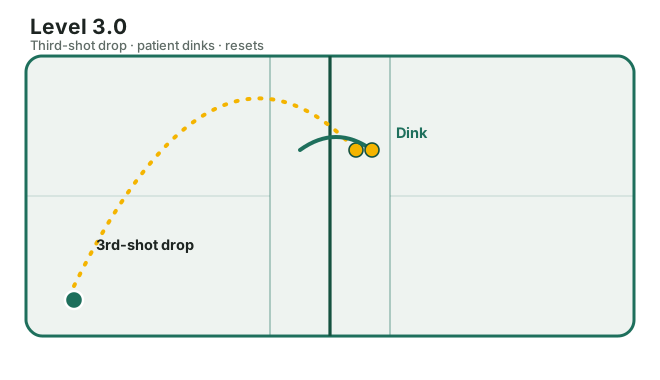
A dink is a soft shot, hit from near the kitchen line, that arcs gently over the net and lands in the opponents' non-volley zone. It looks easy and unimportant when you first see it, but the dink is where points are built and won at every level above raw beginner. This guide covers what a dink is for, how to hit one cleanly, where to aim, and how to practise until it becomes reliable under pressure.
Why you dink at all
You dink because of the kitchen rule: nobody can volley from inside the non-volley zone, so a ball that lands soft and low in the kitchen cannot be attacked. By keeping the ball low and unattackable, you deny the opponents a put-away and wait for them to make a mistake — to pop one up high enough for you to step back and volley. The dink is patient, defensive-looking, and quietly the most aggressive shot in the game, because it slowly forces an error.
Grip and ready position
Use a relaxed continental grip — the same grip you would use to hammer a nail — and hold the paddle loosely, around a 3 or 4 out of 10 in pressure. A death grip kills the soft touch a dink needs. Stand at the kitchen line with knees bent, paddle up and out in front of your body, weight on the balls of your feet. From this athletic ready position you can reach a ball to either side without lunging into the kitchen.
The shot itself: push, do not swing
A good dink is a push, not a swing. Contact the ball out in front of you, with a gentle low-to-high motion that lifts the ball just enough to clear the net and drop. The power comes from a small shoulder and leg push, not from the wrist; flicking the wrist is the fastest way to send dinks long or into the net. Keep the paddle face slightly open so the ball lifts softly, and let your legs do the work by bending to the height of the ball rather than reaching down with the arm.
Where to aim
The safest and most common dink is cross-court: the diagonal is longer, so you have more margin over the net and more room before the baseline. Cross-court dinks also pull your opponent wide, opening the middle. Straight-ahead dinks are riskier because the net is higher at the sidelines and the distance is shorter, but they are useful to change the rhythm or attack a weaker opponent. As a rule, aim for the opponents' feet or the spot just inside the kitchen line — a ball at the feet is the hardest to do anything with.
When to speed up
Dinking is not endless. The whole point is to wait for a ball that sits up too high, then change speeds and attack it. If a dink comes back above net height and you are balanced behind the kitchen line, that is your cue to drive or roll it at the opponents' feet or body. Patience plus a willingness to attack the right ball is the complete package; players who only dink get pushed around, and players who attack every ball give away free points.
Footwork and positioning
Get to the kitchen line and hold it. Most dink errors happen when players are caught in no-man's-land, halfway up the court, and have to half-volley awkward bounces. Move as a pair with your partner, shifting together so the middle is never wide open. For wide dinks, slide along the line rather than stepping into the kitchen, and reset to your ready position immediately after each shot so you are never flat-footed for the next one.
Two simple drills
To groove the feel, practise cross-court dinks with a partner: stand diagonally at the kitchen and rally soft dinks, counting how many you can keep in a row in the kitchen without one popping up. Aim to beat your record each session. Solo, use a wall: stand a few feet back and dink against it continuously, focusing on soft contact and a quiet wrist. Ten minutes of either drill, a few times a week, builds the touch faster than playing games alone ever will. Once the dink is steady, it pairs naturally with the third-shot drop, which uses the same soft hands from deeper in the court.
Treat the dink as a skill to be trained, not just a shot you do during a rally. The players who win the soft exchange are almost always the ones who practised it on purpose.
Common beginner mistakes
- Gripping too tightly, which sends dinks long or into the net.
- Flicking the wrist instead of pushing with the shoulder and legs.
- Standing in no-man’s-land instead of holding the kitchen line.
- Trying to attack every dink instead of waiting for a high ball.
Quick checklist
- Relaxed grip (3–4 out of 10 pressure)
- Knees bent, paddle up and out in front
- Contact out front with a soft low-to-high push
- Aim cross-court at the feet or just inside the kitchen
- Reset to ready position after every dink
Frequently asked
Should I dink cross-court or straight?
Cross-court is safer and more common because the diagonal gives more margin and pulls opponents wide. Use straight dinks to change rhythm or target a weaker player.
How do I stop popping my dinks up too high?
Relax your grip, bend your knees to the ball instead of reaching, and push with a quiet wrist. Most pop-ups come from a tight grip or a wristy flick.
How long should a dink rally last?
As long as it takes for one side to give you a ball above net height. The dink is a waiting game; you attack the first true mistake.
Can I practise dinking alone?
Yes. Stand a few feet from a wall and dink softly against it continuously, focusing on soft contact and a still wrist. Ten minutes builds real touch.