Why your DUPR is lower than you expected
It is usually the rating being honest, not wrong.
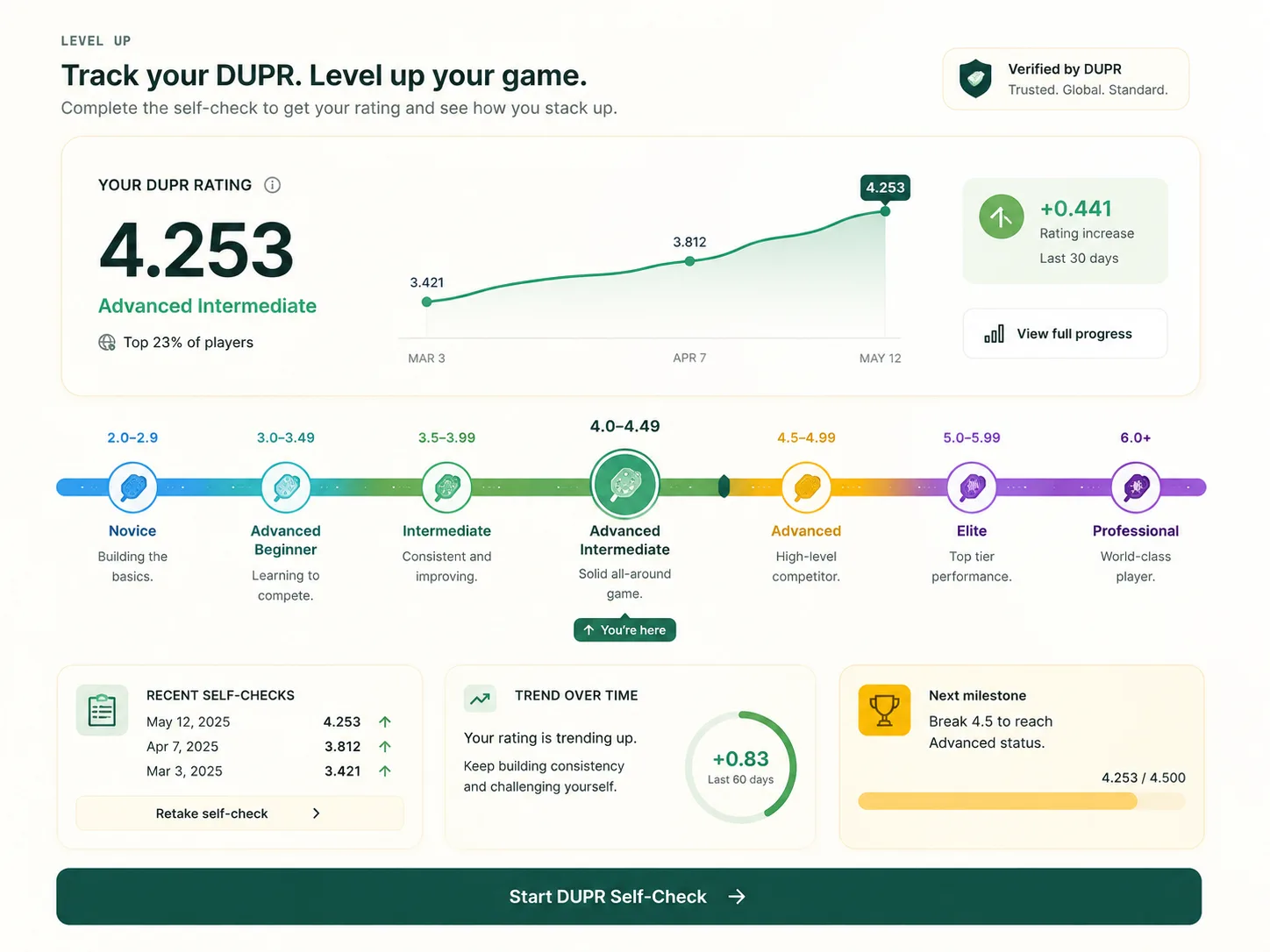
A lot of players look at their DUPR and feel it is too low. Almost always, the rating is not broken — it is being honest in a way self-ratings and club labels are not. Here is why your number might come out lower than you expected, and what actually moves it.
It measures results, not effort or best shots
DUPR is calculated from the scores of matches you log, weighed against the strength of your opponents. It does not see how good your best shot is, how hard you trained, or how you felt you played — only what the scoreboard says against whom. A rating that feels low is usually just reflecting results honestly. For the full picture of how it works, see what DUPR is.
Early ratings are less settled
When you have logged only a few matches, the system has little information and your rating is less reliable, so it can sit lower or swing more. As you log more matches against varied opponents, the rating stabilises and better reflects your true level. A new rating is a first estimate, not a final verdict.
Score margins matter
DUPR pays attention to how close matches are, not just who won. Narrow losses to strong players can help your rating, while scraping out close wins over much weaker players does little. If you mostly log blowouts in either direction, your number may not move the way raw win-loss would suggest.
Self-ratings and club ratings often run high
Many players are used to a self-assessed or club number that drifted upward over time, because local labels are generous and rarely tested across a wider pool. DUPR puts everyone on one universal scale, so it often lands lower than a flattering local rating. That gap is normal; see official DUPR vs club ratings for why.
You may be logging your toughest matches
If the matches that get logged are mostly your competitive league and tournament games against strong opponents, your results there will be harder-earned than your casual wins, and your rating reflects that tougher slate. That is the system working as intended, not penalising you.
It lags your improvement
Your rating reflects recent results, so a week of real improvement shows up only once the wins follow. Be patient: keep playing well and the number catches up rather than leading.
What to actually do
Log more matches against a variety of opponents, play people slightly above you, and keep scores competitive rather than chasing easy blowouts. Above all, treat DUPR as a tool to find fair games and track long-term progress, not a verdict on you as a player. If you want a quick gut-check on where your decisions sit, the self-check gives an estimate while your logged rating matures.
Common beginner mistakes
- Assuming a low rating is an error rather than honest feedback.
- Comparing DUPR directly to an inflated club or self-rating.
- Logging only easy blowouts and expecting big movement.
- Obsessing over short-term swings instead of the trend.
Quick checklist
- Log more matches against varied opponents
- Play people slightly above your level
- Keep scores competitive, not lopsided
- Judge the long-term trend, not single results
- Use the self-check as a gut-check while your rating matures
Frequently asked
Is my DUPR wrong if it feels low?
Almost never. It reflects logged results against real opponents. A low-feeling rating is usually honest, where self or club ratings were generous.
How do I raise my DUPR?
Log more competitive matches against varied and slightly stronger opponents, and keep scores close. Blowout wins over weak players move it little.
Why did my rating drop after a good week?
It reflects recent logged results, so improvement shows up only once the wins follow. Keep playing well and it catches up.
Should I stop logging losses?
No. Competitive losses, especially close ones against strong players, give the system the information it needs and can even help your rating.