Why backhand resets are hard and how to practice them
The reset is not a weak shot — it is how you survive pressure and regain neutral.
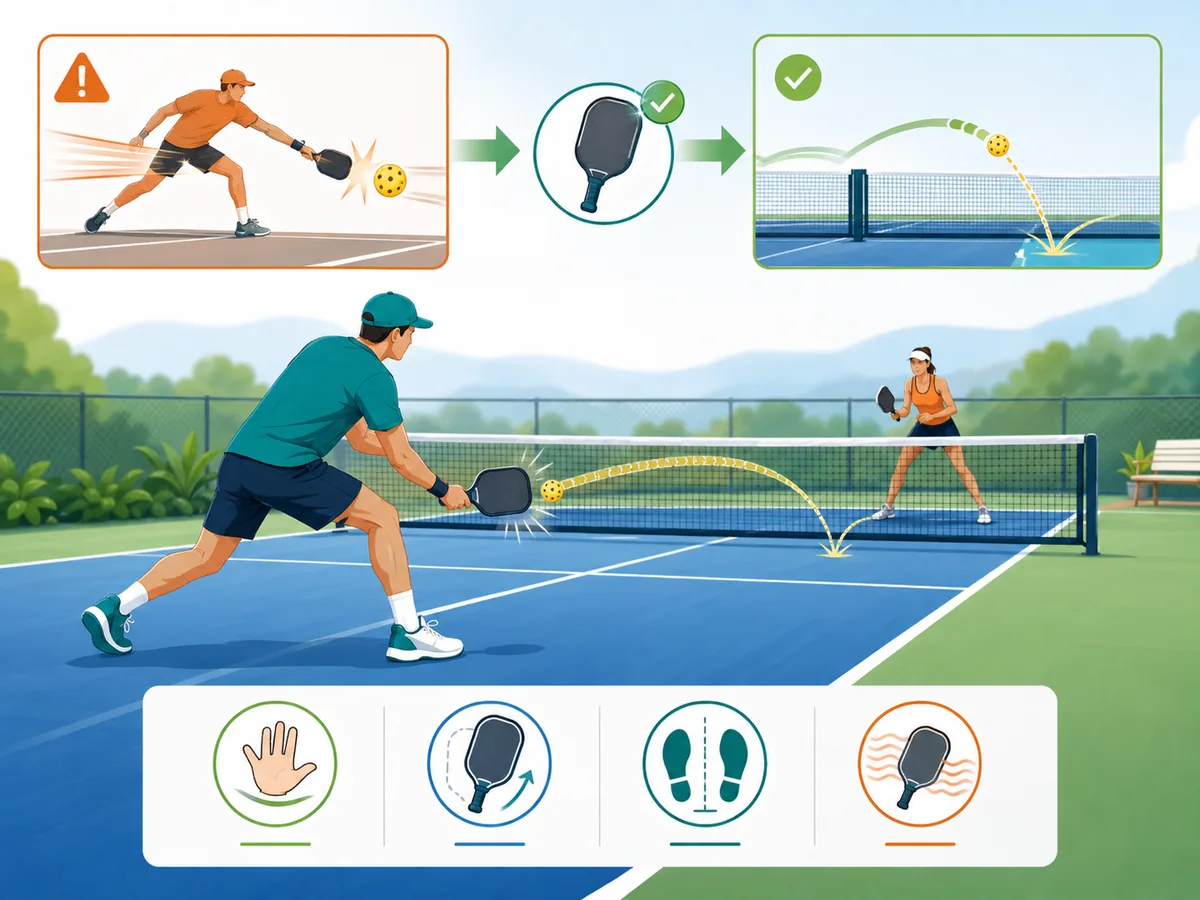
The backhand reset is one of the shots that makes intermediate players feel stuck. It looks simple when better players do it: the ball comes fast, the paddle barely moves, and the ball drops softly into the kitchen. But when you try it, the ball pops up, dies in the net, or flies long. The reset is hard because it asks for less swing at the exact moment your body wants to do more.
What a reset is for
A reset is not meant to win the point. It is meant to stop losing the point. When opponents attack your feet or body, the reset absorbs pace and drops the ball into a place they cannot attack easily. If it works, the rally returns to neutral and your team gets another chance to move forward. This is why resets matter so much in the transition zone.
Contact in front and low-to-high
Most missed backhand resets happen because contact is too far beside the body or too late. Keep the paddle in front of your chest, with a slightly open face, and let the ball meet the paddle. The motion is more of a soft lift than a punch. You are not blocking the ball straight back; you are catching enough pace to send it gently over the net.
Relax the grip
A tight grip turns the paddle into a trampoline. The ball jumps off the face and becomes a pop-up. Use lighter grip pressure, especially at contact. The paddle should feel stable but not squeezed. Think of absorbing, not striking. Many players improve immediately when they reduce grip pressure and shorten the swing.
Use your body as a brake
If your body is falling backward, even a good paddle angle can fail. Set your feet, bend slightly, and let your legs absorb some of the speed. In transition, split step as the opponent hits. If you are still running when the ball reaches you, your hand will have to solve too much.
Two useful drills
First, have a partner stand at the kitchen and feed firm balls to your backhand while you stand in transition. Your only goal is to land resets in the kitchen. Second, play a half-court game where the attacking player can speed up, but the defender scores only when they reset twice in a row. These drills teach you to value neutral, not panic.
Backhand resets are a perfect video-review topic. On Picklary skill review, ask reviewers to mark contact point, grip pressure signs, and whether your feet are stopped before impact.
Common beginner mistakes
- Punching the reset with a tight grip.
- Contacting the ball beside or behind the body.
- Trying to win the point with a defensive ball.
- Running through the shot instead of split stepping.
Quick checklist
- Keep the paddle in front of your chest
- Use a slightly open paddle face
- Relax grip pressure at contact
- Split step before the opponent hits
- Aim to land the ball softly in the kitchen
Frequently asked
Is a reset just a block?
Not exactly. A block sends pace back; a reset absorbs pace and drops the ball into a safer neutral area.
Why do my resets pop up?
Usually tight grip, too much punch, or late contact. Soften the hand and contact in front.
Where should a reset land?
Ideally in the kitchen, low enough that the opponent cannot easily attack.