Skills & Drills · Editor's pick
Third shot drop or drive: how to choose
The right third shot depends on the return you receive, not on the shot you like most.
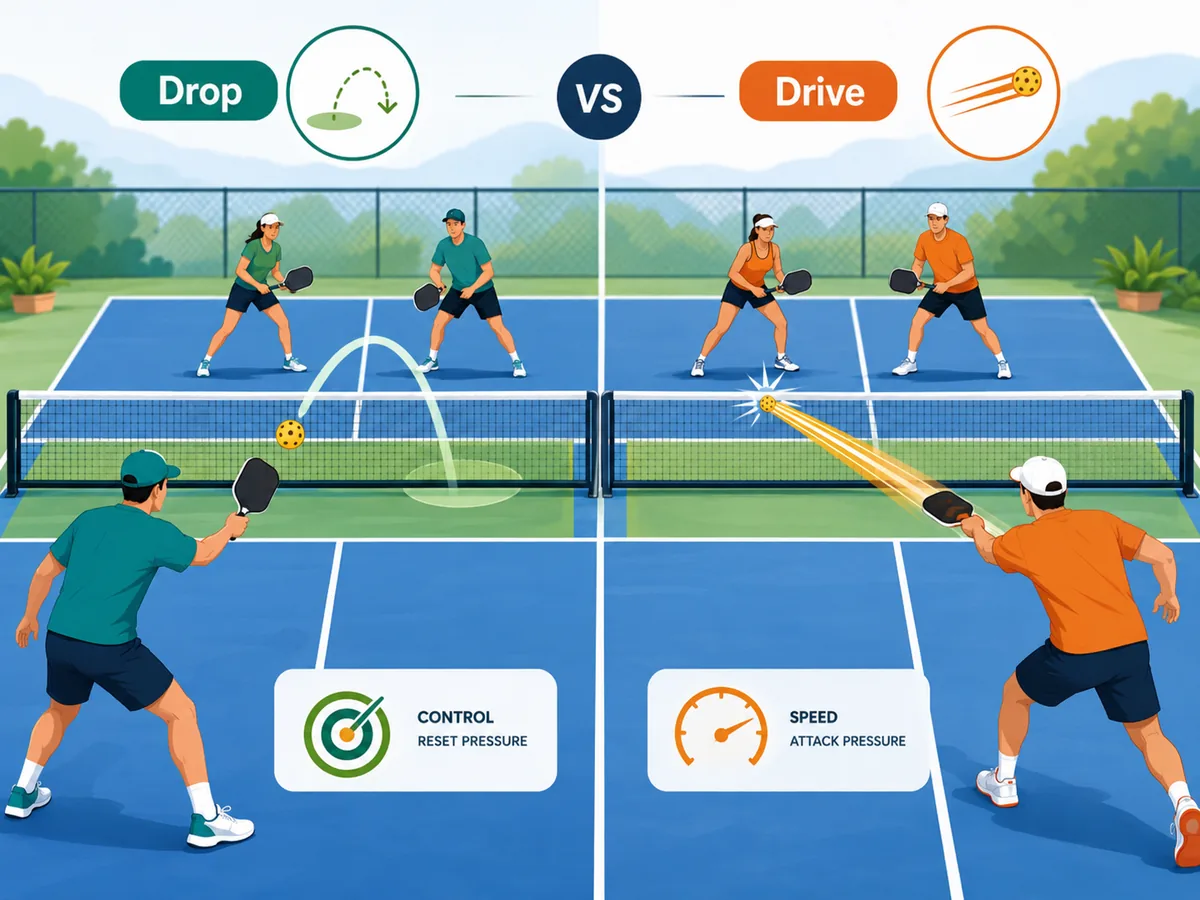
The third shot is famous because it decides whether the serving team can move forward. But many players ask the wrong question: “Should I be a drop player or a drive player?” A better question is, “What does this return allow?” The return's depth, height, speed, and your balance should choose the shot for you.
Deep and low return
If the return lands deep and stays low, a full drive is usually low percentage. You are hitting from behind the baseline, often moving backward, into opponents who are already approaching the kitchen. In this situation, a soft drop, a lifted reset, or even a safe middle ball can be smarter. The goal is to give yourself time to step in, not to win the point immediately.
Short and high return
A short high return is a green light. You can step forward, contact in front, and drive with controlled pace. The target does not have to be small; deep middle or body pressure often works better than going for a sideline. The key word is controlled. If the return gives you an advantage, do not give it back with a wild swing.
Your balance matters
Even an attackable ball becomes risky if you are late, reaching, or falling away. Before choosing, ask: can I contact in front with a stable base? If yes, drive or aggressive drop may work. If no, choose a safer reset. Third-shot decisions should consider your body, not only the ball.
Where is your partner?
If your partner is ready to move forward with you, a drop can help both of you reach the kitchen together. If your partner is still recovering from serve position or pulled wide, a hard drive may create a fast counterattack before your team is set. Good third-shot choice is a team decision, even when one person hits the ball.
Use patterns, not guesses
Try this simple pattern in games: deep low returns get a safer drop or reset; short high returns get a controlled drive; medium returns depend on your balance. After each game, ask which third shots gave you forward progress and which ones created pop-ups. Improvement comes from recognising the same situations earlier.
On Picklary's skill review page, ask reviewers to score “third-shot choice” separately from “third-shot execution.” A missed drop after the right decision is different from a drive that should never have been attempted.
Common beginner mistakes
- Driving deep low returns from behind the baseline.
- Trying to hit perfect drops instead of useful drops.
- Ignoring partner position before attacking.
- Judging the choice only by whether the ball went in.
Quick checklist
- Read return depth first
- Check whether contact is in front
- Choose controlled drive on short high returns
- Choose drop or reset on deep low returns
- Review whether the shot helped your team move forward
Frequently asked
Should beginners learn drop or drive first?
They should learn both at basic level, but more importantly learn when each shot is appropriate.
Is a third shot drive bad?
No. It is useful when the return is short, high, or gives you time. It becomes risky when forced from low, deep balls.
What is a good target for a drive?
Deep middle or body pressure is often safer than trying to hit a sideline winner.