How to choose a pickleball coach for your level
A good coach is not just the best player — it is the person who can solve your next bottleneck.
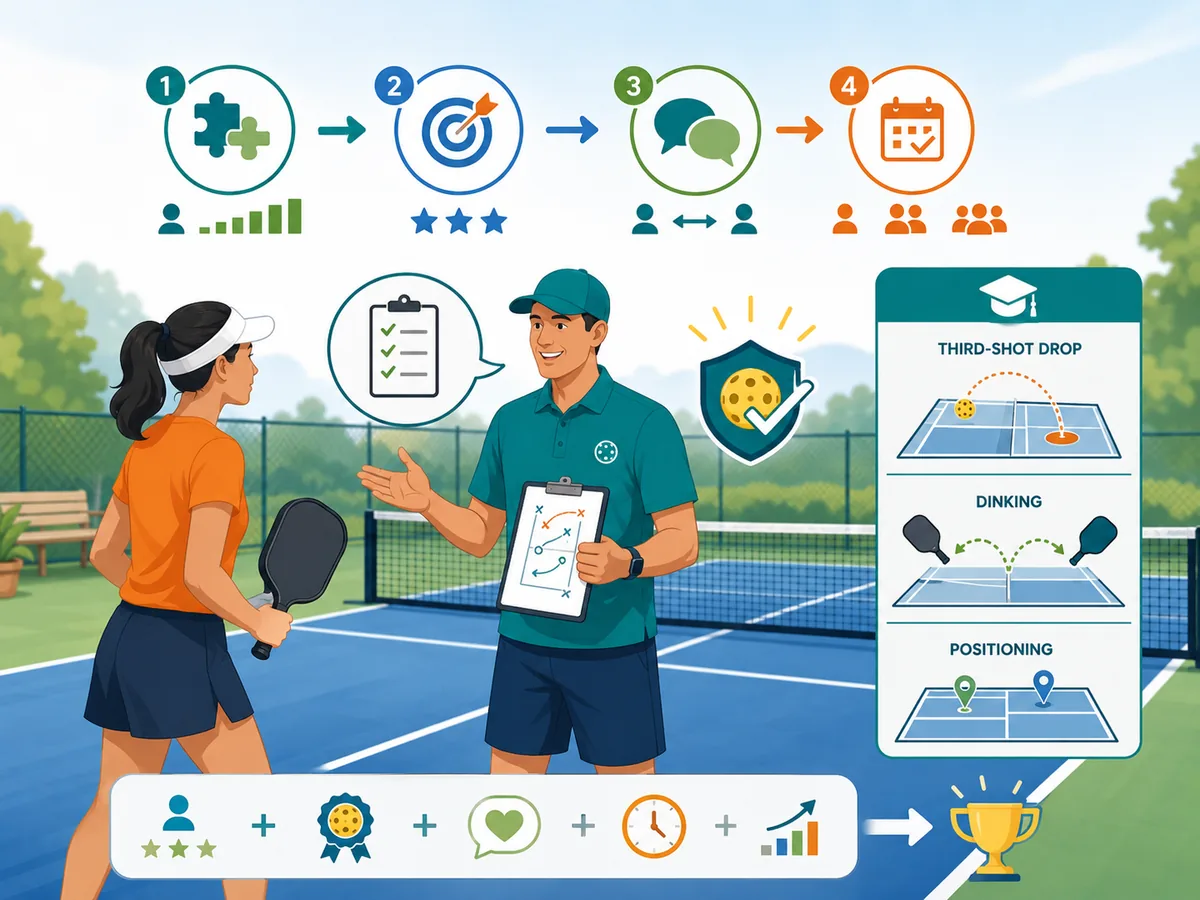
A great pickleball coach for one player may be the wrong coach for another. Beginners need clarity and safety. 3.0 players often need structure and fewer repeated mistakes. 3.5 players may need decision training, transition work, and match patterns. The best coach is not simply the strongest player in town; it is the person who can diagnose your current bottleneck and design practice around it.
Match the coach to your current level
If you are new, look for a coach who explains rules, grip, ready position, serve, return, and kitchen movement without overwhelming you. If you are 3.0, look for someone who can organise serve-return-third-shot patterns and reduce unforced errors. If you are 3.5, ask whether the coach works on resets, speed-up recognition, transition-zone decisions, and doubles strategy.
Choose by skill focus
Do not book a lesson with a vague goal like “make me better.” Pick one or two skills: third shot drop, backhand reset, dink consistency, serve depth, return depth, volley exchanges, or positioning. A clear goal makes the lesson measurable. You should leave knowing what to practice for the next two weeks.
Look for specific feedback
Good coaching feedback is specific and actionable. “Bend your knees” may be true, but “split step before the opponent hits so your backhand reset contact moves in front” is more useful. During a lesson, notice whether the coach explains cause and effect. You are paying for diagnosis, not just ball feeding.
Use local coach and student pools
Picklary's coach finder separates students looking for a skill from coaches looking for students in a region. That matters because a local pool can create better group lessons. If five 3.0 players in the same ZIP code want third-shot work, a coach can offer a focused clinic instead of five separate generic lessons.
Red flags
Be cautious if a coach guarantees a DUPR jump, cannot explain lesson goals, spends most of the time showing off, or gives every player the same drill regardless of level. Also be clear about paid listings or sponsorships. If a coach is promoted because of a paid placement, that should be disclosed.
A good coach shortens the feedback loop. You hit, they observe, they identify the pattern, and you leave with a practice plan that matches your level.
Common beginner mistakes
- Choosing only by playing level or reputation.
- Booking lessons without a specific goal.
- Accepting vague feedback that does not change practice.
- Ignoring whether the coach works with your level.
Quick checklist
- State your current level
- Pick one or two lesson goals
- Ask how the coach structures practice
- Look for specific cause-and-effect feedback
- Use local pools to find group lesson opportunities
Frequently asked
Should I choose the highest-rated player as a coach?
Not necessarily. Teaching skill and level fit matter as much as playing level.
What should I ask before a first lesson?
Ask what they would work on for your level and how they measure progress after the lesson.
Are group lessons useful?
Yes, especially when students share level and skill goal. A local student pool can make this easier.