Serve and return basics: common mistakes and fixes
Build two reliable shots before anything fancy.
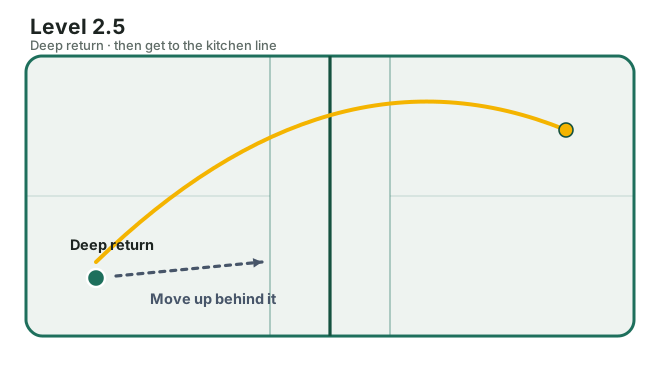
The serve and the return are the two shots that start every single rally, and getting them reliable is the fastest way to stop giving away cheap points. Neither needs to be fancy. A consistent, deep serve and a consistent, deep return — followed by getting to the net — will win you far more points at the beginner and intermediate levels than any flashy winner. Here is how to build both.
The serve: consistency first
The single most important quality of a serve is that it goes in. A serve fault gives the rally away for free, so before you chase pace or spin, build a serve you can land nine times out of ten. Remember the legal requirements: contact below the waist, an underhand motion with the paddle head below the wrist, served diagonally into the correct box, clearing the kitchen. If those rules feel awkward, use the legal drop serve — drop the ball, let it bounce, and hit it — which removes the contact-height rules and is much easier to repeat.
Where to serve
Aim deep. A serve that lands near the opponents' baseline pushes them back and makes their return harder, while a short serve invites an easy, aggressive return. The safest target is deep and toward the middle, which reduces angles and cuts down on errors. As you improve, you can occasionally serve deep to the opponent's backhand to draw a weaker return, but never sacrifice consistency to do it. Power is the last thing to add, not the first.
The return: deep, then forward
The return has two jobs: land deep, and get you to the net. Because of the two-bounce rule, you must let the serve bounce before returning, which gives you time — use it. Hit a deep return down the middle, then move forward to the kitchen line behind your shot. A deep return keeps the serving team pinned at the baseline and forces them into a hard third shot, while a short return lets them move up easily and takes away your advantage.
Footwork after the return
The biggest beginner mistake is admiring the return and standing still. The return is your ticket to the net, so the moment you hit it, start moving forward. You will not always reach the kitchen before the third shot arrives — that is fine; advance as far as you can, split-step when the opponents make contact, and continue once you have read the ball. As the returning team, you have the positional advantage at the start of the rally, and good footwork is how you keep it.
Why depth beats power
New players often try to hit hard serves and returns, but pace without depth just gives the opponents a fast ball to redirect. Depth, on the other hand, eats up the opponents' time and space no matter how hard you hit. A medium-pace serve that lands two feet from the baseline is far more useful than a hard one that lands mid-court. Train yourself to think "deep and in" on every serve and return, and the points will follow.
Simple drills
For serving, set a target a couple of feet inside the baseline — a towel or cone works — and serve ten balls, counting how many land deep and in. Track your number over sessions; aim for eight out of ten before adding any pace. For returns, have a partner serve to you and practise returning deep down the middle and immediately moving to the kitchen, holding your split-step on their third shot. Even five minutes of each before you play turns two shaky shots into dependable ones.
Serve and return are unglamorous, but they set up everything else. Pair a dependable deep return with a solid third-shot drop and you control how almost every rally begins.
Common beginner mistakes
- Chasing pace or spin before the serve is reliable.
- Serving or returning short, which invites an aggressive reply.
- Standing still to admire the return instead of moving to the net.
- Trying to hit winners off the serve or return instead of building the point.
Quick checklist
- Legal serve: underhand, below the waist, correct diagonal box
- Aim the serve deep and toward the middle
- Let the serve bounce, then return deep down the middle
- Move to the kitchen behind your return
- Split-step as the opponents hit the third shot
Frequently asked
Should I use the drop serve or the traditional serve?
Either is legal. The drop serve (drop, bounce, hit) removes the contact-height rules and is easier to repeat, so it is a great choice for beginners building consistency.
Where should I aim my return?
Deep and down the middle is the safest, highest-percentage target. It keeps the serving team pinned at the baseline and reduces the angles they can use against you.
Why does everyone say to return deep?
A deep return forces the serving team to hit a hard third shot from the baseline and gives you time to get to the net, where points are won.
Is it worth learning a spin serve?
Only after your serve is consistent. Spin and pace are useful change-ups later, but an unreliable fancy serve loses more points than a plain deep one ever will.