What a DUPR 3.0 player looks like — and how 3.0 differs from 3.5
The skills, habits, and gaps that define the most common rec level.
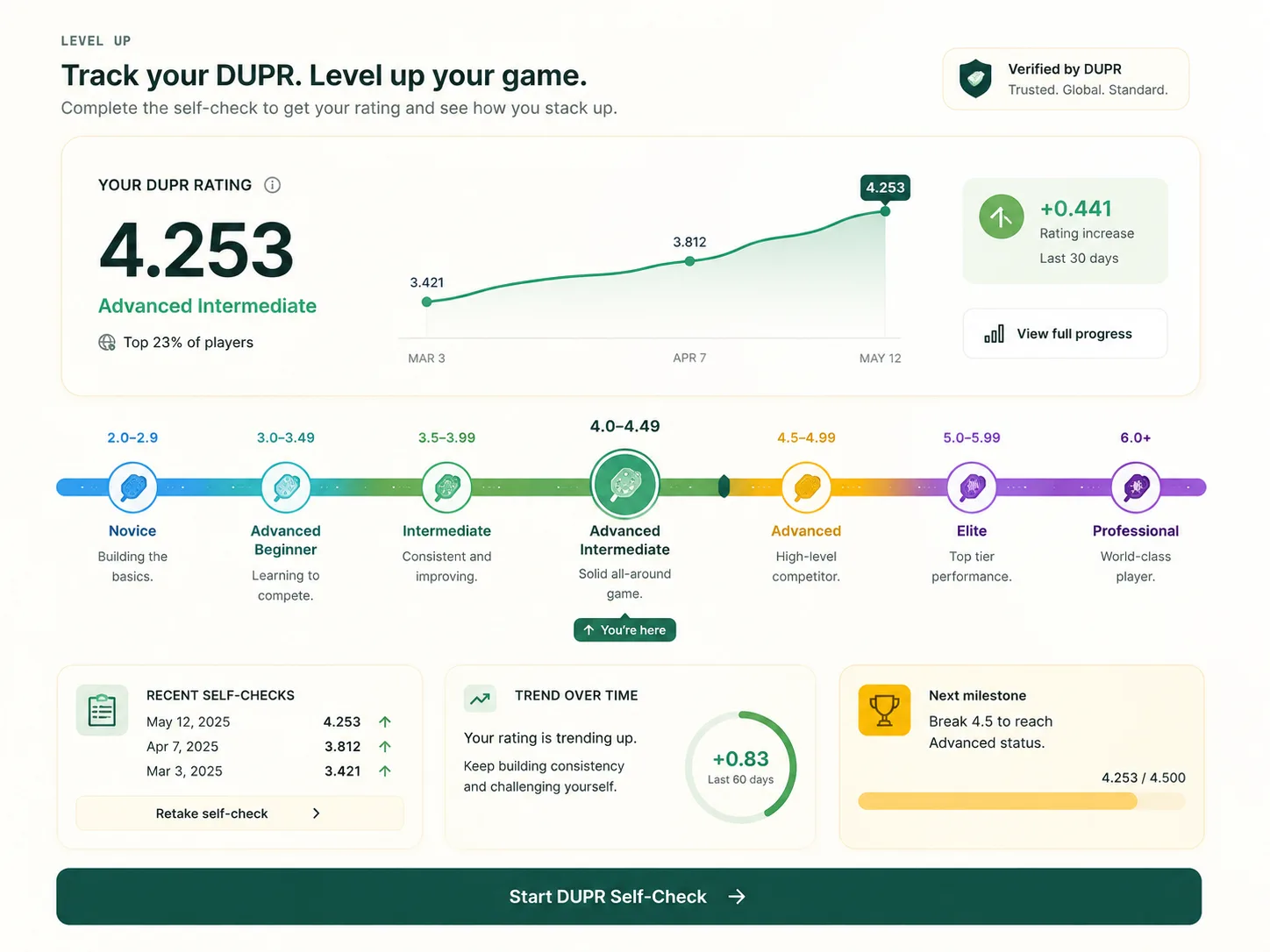
"3.0" is the level most recreational players hover around, which makes it the one people ask about most. Below is a plain, practical picture of what a 3.0 player can usually do, where they still struggle, and how 3.0 differs from 3.5. These are general skill descriptions, not official DUPR cut-offs — a real DUPR rating comes only from logged matches — but they will help you place yourself honestly.
What a 3.0 player can usually do
A 3.0 player has the basics working. They can get serves and returns in consistently, sustain a medium-length rally without spraying easy balls, and hit a recognisable dink. They understand the core rules, know to let the serve and return bounce, and they get themselves up to the kitchen line during a point. The game looks organised rather than chaotic, and points are usually lost to a missed execution rather than total confusion about what to do.
Where 3.0 players still struggle
The gaps at 3.0 are mostly about consistency under pressure and shot selection. The third-shot drop is hit-or-miss, so the trip from the baseline to the kitchen is risky. Dinks pop up too high when an opponent applies pressure, and there is a strong urge to speed the ball up too early instead of staying patient. Resets — softening a hard ball back into the kitchen — are unreliable, and footwork at the kitchen often drifts, leading to volleys taken off-balance. None of this is unusual; it is exactly the work that the next level is built on.
3.0 versus 3.5: the real difference
The jump to 3.5 is not about hitting harder — it is about doing the right thing more often. A 3.5 player has a more dependable third-shot drop, keeps dinks low under pressure, can reset a fast ball instead of popping it up, and makes noticeably fewer unforced errors. They are more patient in the soft game, hold the kitchen line as a pair, and choose targets on purpose rather than just returning the ball. In short, 3.0 can execute the shots in calm moments; 3.5 executes them when the point gets uncomfortable.
How to tell if you are around 3.0
Ask yourself a few honest questions. Can you keep a gentle dink rally going, or does it break down after two or three balls? Does your third-shot drop land in the kitchen more often than not, or do you mostly drive and hope? When a ball comes at you fast, do you reset it softly or pop it up? If your honest answers are "rallies break down," "I drive more than I drop," and "I tend to pop it up," you are likely in the 3.0 range with clear, trainable next steps. To turn that picture into a starting estimate, try our DUPR self-check, and read the Level 3.0 and Level 3.5 pathway pages.
Where to go next
If you recognise yourself here, the fastest progress comes from a few targeted skills rather than playing more games on autopilot. A reliable third-shot drop and patient, low dinking are the two biggest levers from 3.0 to 3.5. Build those, log some real matches to earn an actual DUPR, and the number will follow your improving game rather than the other way around.
Common beginner mistakes
- Driving the third shot and hoping instead of practising a drop.
- Speeding the ball up too early instead of staying patient in dinks.
- Popping resets up when the ball comes fast.
- Treating a level label as a verdict rather than a training guide.
Quick checklist
- Can you sustain a dink rally past a few balls?
- Does your third-shot drop land in the kitchen more often than not?
- Can you reset a fast ball softly instead of popping it up?
- Do you hold the kitchen line with your partner?
- Take the self-check, then log matches for a real DUPR
Frequently asked
Is 3.0 a beginner level?
Not quite. A true beginner is usually around 2.0 to 2.5. A 3.0 player has the basics working and loses points to missed execution rather than confusion.
How long does it take to go from 3.0 to 3.5?
It varies widely with practice quality. Targeted drilling of the third-shot drop, dinks, and resets moves people up faster than only playing games.
Is this an official DUPR description?
No. These are general skill characteristics commonly associated with the range. A real DUPR rating is calculated from your logged match results at dupr.com.
How do I find my level quickly?
Use the Picklary self-check for a starting estimate from your shot decisions, then log real matches to build an actual DUPR.