From 3.0 to 3.5: a focused improvement plan
The handful of skills that actually move you up a level.
Going from 3.0 to 3.5 is the most-wanted jump in recreational pickleball, and the good news is that it comes from a short list of specific skills rather than a vague "get better." A 3.5 player is not stronger; they are more reliable when the point gets uncomfortable. Here are the skills that close the gap and a simple way to practise them.
What 3.5 actually adds
The difference is consistency under pressure and smarter shot selection: a dependable third-shot drop, dinks that stay low when an opponent pushes, the ability to reset a fast ball, deeper returns, and tighter positioning — all adding up to far fewer unforced errors. If you want the full picture of where you are starting from, read what a 3.0 player looks like first.
Skill 1: a reliable third-shot drop
The drop is what lets you leave the baseline safely, and an unreliable one keeps you stuck in defence. Drill it on its own: from the baseline, aim soft arcs into the kitchen, counting how many land in versus sail long or into the net. Our guide to the third-shot drop breaks down the technique. Aim to make it your default third shot, with the drive as a change-up rather than your only plan.
Skill 2: patient, low dinks
At 3.5, dinks stay low and players wait for a genuine mistake instead of forcing one. Practise cross-court dink rallies and keep the ball below net height; the moment it sits up is your cue to attack, not before. The dinking fundamentals guide covers grip, contact, and targeting. Patience here wins more points than power ever will.
Skill 3: deep returns and getting to the net
A deep return pins the serving team back and buys you time to reach the kitchen behind it. Work on returning deep and immediately moving forward, rather than admiring the shot from the baseline. Our serve and return guide explains the targets. Simply getting both feet to the kitchen line after your return removes a huge share of 3.0 errors.
Skill 4: resets under pressure
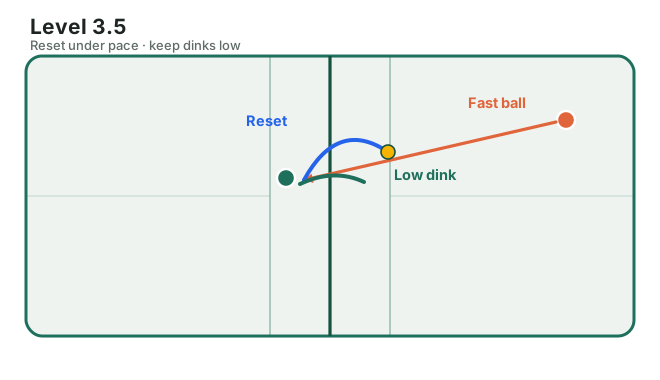
When a ball comes at you fast, a 3.5 player softens it back into the kitchen instead of panicking or popping it up. Practise taking pace off the ball with a relaxed grip and a still paddle face. The reset is what keeps you in points you used to lose outright, and it is one of the clearest markers of the 3.5 level.
Skill 5: positioning as a pair
Move with your partner like you are connected by a rope: when one shifts to cover a wide ball, the other slides to protect the middle. Holding the kitchen line together, rather than one up and one back, denies opponents the easy gaps. Our doubles positioning guide shows the basic movements.
The biggest lever: fewer unforced errors
More than any single shot, 3.5 players simply miss less. Before chasing winners, count your unforced errors in a few games — balls you gave away with no pressure. Cutting those in half will raise your level faster than any flashy shot, because most recreational points are lost, not won.
A simple weekly plan
Spend more time drilling than playing while you build these skills — a rough split of two parts focused drilling to one part games works well. A practical session: ten minutes of cross-court dinks, ten minutes of third-shot drops, ten minutes of reset practice against a feeder, then games where you consciously use what you drilled. Keep one measurable goal per session, like "drop lands in the kitchen 7 of 10 times." Then log real matches to earn an actual DUPR, and use the self-check and the Level 3.5 page to track where you are heading.
Common beginner mistakes
- Only playing games instead of drilling the specific weak skills.
- Chasing winners while giving away easy unforced errors.
- Driving every third shot instead of building a drop.
- Staying at the baseline to admire a return instead of moving up.
Quick checklist
- Third-shot drop as your default, drive as a change-up
- Keep dinks below net height and wait for the real mistake
- Return deep and move both feet to the kitchen
- Reset fast balls softly instead of popping up
- Drill 2:1 over games; one measurable goal per session
Frequently asked
What is the fastest way to reach 3.5?
Drill the third-shot drop, low dinks, and resets, and cut your unforced errors. Targeted practice moves you up faster than only playing games.
Should I drill or just play more?
Both, but weight it toward drilling while you build new skills — roughly two parts drilling to one part games — then test them in real games.
How do I know I have reached 3.5?
Your drop is dependable, your dinks stay low under pressure, you reset fast balls, and you make clearly fewer unforced errors. Log matches to confirm with a real DUPR.
Is power important for 3.5?
Less than you think. Consistency, patience, and shot selection separate 3.5 from 3.0 far more than how hard you can hit.