What a DUPR 2.5 player looks like — and how to reach 3.0
The advanced-beginner level, and the path out of it.
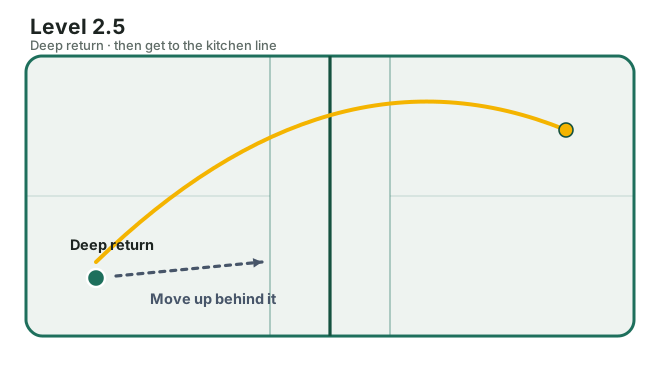
2.5 is the advanced-beginner level: past your very first sessions, but still building the consistency that defines a 3.0 player. Here is a plain picture of what 2.5 looks like and the clearest path to 3.0. As always, these are general skill descriptions rather than official cut-offs — a real DUPR comes from logged matches.
What a 2.5 player can usually do
A 2.5 player knows the rules well enough to play a real game, can get serves and returns in much of the time, and can keep a short rally going. They are starting to understand the kitchen and that the serve and return must bounce, and they attempt dinks even if they are not yet reliable. The game is recognisable pickleball rather than constant scrambling.
Where 2.5 players struggle
The defining gap is consistency. Serves and returns still miss more often than they should, rallies break down after a few balls, and dinks tend to sail or pop up. Players at this level often rush to the net too early or stay back too long, and they reach the kitchen line late. Points are frequently decided by an easy unforced error rather than by a tough shot.
2.5 versus 3.0
The move to 3.0 is mostly about reliability. A 3.0 player lands serves and returns consistently, sustains medium-length rallies without spraying easy balls, and gets up to the kitchen during the point. They are not doing anything exotic — they are simply missing less and controlling the ball more. To see the target clearly, read what a 3.0 player looks like.
How to reach 3.0
Build in order. First, make your serve and return dependable — getting them in every time removes the biggest source of lost points at this level; our serve and return basics guide shows the targets. Second, commit to letting the serve and return bounce and then moving forward to the kitchen line. Third, start a soft game: practise gentle dinks so a rally does not end the moment it slows down. A simple, repeatable practice plan helps; our first 30 days routine lays one out.
Keep it simple and consistent
At 2.5, the fastest progress comes from consistency, not fancy shots. Keep the ball in play, reduce easy misses, and get to the kitchen, and you will be at 3.0 sooner than you think. When you want a starting estimate of your level, the self-check gives one from your shot decisions, and logging real matches will build your true DUPR over time.
Common beginner mistakes
- Missing too many serves and returns.
- Rushing to the net too early or staying back too long.
- Letting rallies end as soon as the ball slows down.
- Chasing fancy shots before the basics are consistent.
Quick checklist
- Land your serve and return nearly every time
- Let the serve and return bounce, then move up
- Get both feet to the kitchen line during points
- Practise gentle dinks to extend rallies
- Follow a simple, repeatable practice plan
Frequently asked
Is 2.5 a complete beginner?
Not quite. A complete beginner is around 2.0. A 2.5 player can play a real game but still misses basics like serves, returns, and dinks more than a 3.0 would.
What should I practise first at 2.5?
Make your serve and return dependable. Getting them in consistently removes the biggest source of lost points and is the fastest route toward 3.0.
How long does 2.5 to 3.0 take?
It varies with practice quality, but focusing on consistency — fewer easy misses and getting to the kitchen — moves people up faster than chasing winners.
Is this an official rating description?
No. These are general skill characteristics. A real DUPR rating is calculated from your logged match results at dupr.com.